
Reviews are simultaneously a ranking lever, a conversion lever, and one of the easier compliance trip-wires Canadian SMBs can stumble into. We see consistent patterns in member-agency client work: SMBs that solicit aggressively get filtered, SMBs that don't ask at all stagnate, and the ones that find the middle path build durable reputation that compounds. The middle path is narrower than most marketers realize.
What each platform actually allows
Google review policies prohibit paying for reviews, incentivizing positive sentiment, or selectively soliciting only happy customers (review-gating). The Google contributor policy is explicit on each. Yelp goes further: their stance is that any solicitation, even neutral honest-review requests, violates terms and risks filtering or suspension. Yelp's filter algorithm is famously aggressive, and even legitimate reviews from infrequent reviewers get filtered out routinely. The pragmatic implication: design Google around honest solicitation, and don't actively solicit Yelp at all.
The compliant request pattern
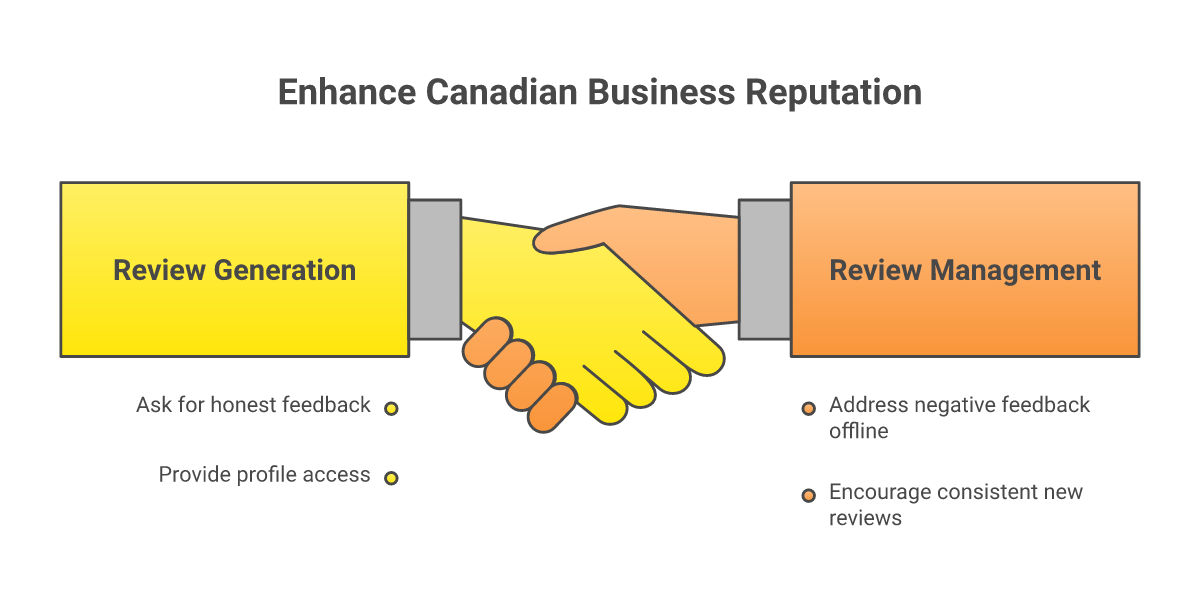
Post-service, send a single request asking for an honest review with a direct link to the Google profile. Don't condition the request on satisfaction (review-gating). Don't offer anything in exchange. Don't follow up multiple times. Don't include scripted language. The request should be plain, short, and indistinguishable from what an individual practitioner would send a satisfied customer. Canadian agencies advising clients on review programs should bake this into client-side documentation as part of the program.

Responding to negative reviews
Respond professionally, briefly, and with an offline-resolution offer. Do not argue facts in the response thread; that escalates and reads badly to other prospects. The Competition Bureau and provincial consumer-protection regulators treat fake or misleading reviews as deceptive practices — including reviews posted by employees or agencies on the business's behalf. That exposure flows from the business, not just the reviewer.
Velocity beats batches
Review velocity — a steady stream over time — produces better ranking and trust signals than batches of reviews concentrated in narrow windows. A burst of 30 five-star reviews in a week looks suspect to filtering algorithms and prospective customers alike. A steady cadence of two or three per month for a year reads as authentic. Build the request into the operational flow rather than running quarterly review-collection campaigns.
Published by CanadianInternetMarketingAssociation.com, 10 May 2026. Platform policies change frequently — verify current Google and Yelp policy text before designing client-facing programs.
Keep reading
Browse the full blog index, jump to our resources, or look up terms in the glossary.